
The housing data that came out of the National Association of Realtors yesterday morning was not good. Sales were down 6.4% from last year, similar to the sales pace to 2000 which if you recall was in a mini recession after the dot-com bubble burst. If you’re me, or follow me, the data is not the least bit surprising. I’ve said for months that you can not have a booming economy while simultaneously having a sagging real estate market and we’ve had a sagging real estate market since early summer. According to me then, this by my definition means that the economy may not be as strong as some would have us believe. I’ll even go a step farther and say that the real estate market is a leading economic indicator and is telling us where the economy as a whole is headed. OK, maybe not exactly a leading indicator rather an early reflection or a collective indicator that foreshadows undercurrents within the economy that are not yet articulated by Wall Street or The Federal Reserve but increasingly being felt on Main Street. The slightest insecurity due to domestic politics, geo-politics, uncertainty at the workplace or in the stock market manifests real estate activity. So, what does that mean for the spring buying season?
You may think that negative data means the start of something ominous. The fact is, if you are looking for ominous, it started several months ago as the Fed raised rates while also selling off their balance sheet. This raised the cost to buy and borrow and buyer’s hit the ceiling on affordability. The decline in sales, heck even showing activity has created longer “on market” times. The result has been a lot more price reductions and inventory has increased making selection in many markets, the best it’s been in some time. “Is that everywhere,” you ask?  No actually, not everywhere but it is pervasive. I just spent considerable time researching and showing a $1.5M client properties on the Westside (of Los Angeles). If you’re familiar with West LA, you know it’s very expensive. The uber expensive Platinum Triangle of Brentwood, Bel Air and Beverly Hills plus Pacific Palisades and the Beaches have listing prices in the middle 7 and even 8 figures. There’s even some in the 9. For our search we were looking more Mid City, think Mar Vista, Culver City, Beverlywood, Larchmont etc. Here’s what we found: A single family new construction (torn down and rebuilt) at about 2,200 SF is starting around $1.8M. At our price point of $1.5-1.6M, you find 1300-1800 SF with good locations in exciting, re-gentrified neighborhoods. The problem is that there are 3-5 offers on anything great within days of listing. $1.5M in a nice location and nicely improved is viewed as just modestly above entry level on the Westside. For example, we wrote an offer at full price on a lovely home in Culver City. My buyer has 25% down and is well qualified. The home was already $150,000 above where we had started looking but it was a terrific neighborhood. Alas, the agent told us that while they appreciated the full price offer, we weren’t the highest. He asked if we wanted a counter but then added it would be over $1.7. My clients said, no thank you, it was over their budget and that was that. Back to the drawing board. What was that old adage about real estate…? Oh yeah, location, location, location. The Westside of Los Angeles is home to Google (they just leased the Westside Pavilion, an entire mall in West LA to house their growing presence in So Cal) and Youtube, Amazon Pictures, Netfilx content, Hulu… am I missing anyone, oh yeah, the rest of the entire entertainment industry that doesn’t stream. It’s home to finance, has several universities, aerospace and is a growing presence in biotech. In other words, this area is exploding with high paying, good quality positions and the demand for turnkey, ready-to-go homes is at a premium. Turnkey is still a big factor. Overpriced, under appointed or fixers are a misleading indicator of available property. This is true in every market I find by the way. Mis-priced properties given the amount of work the require, is often the inventory sitting, even on the red-hot Westside.
OK, so while entry level is still pretty strong, the market is soft in many other price points and it’s especially soft for less than perfect. Ironically, these are the properties we used to think of as wealth creating/equity building opportunities. I wrote an offer for another buyer 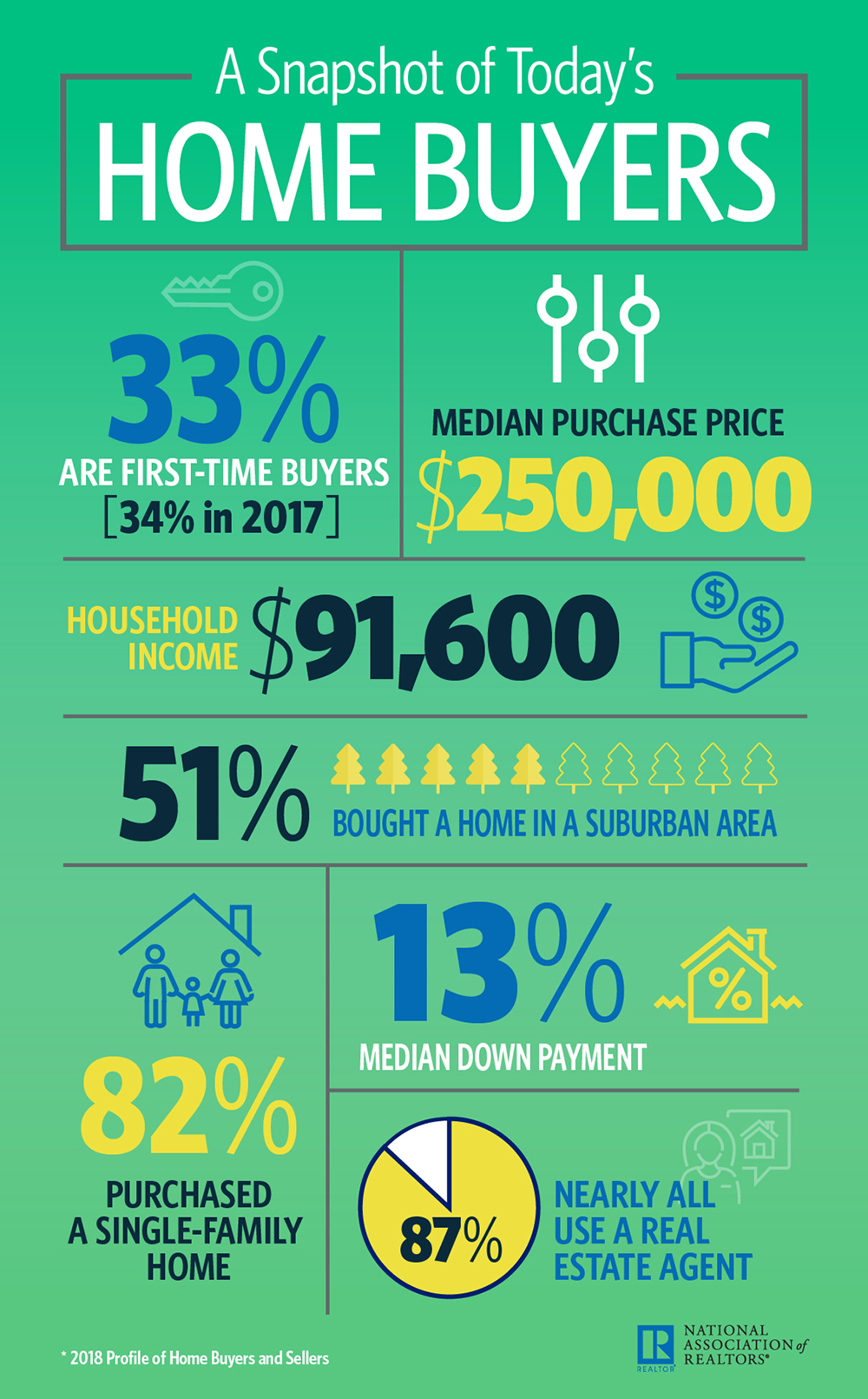 on a home in the Conejo Valley that needs pretty much everything. It has a 1960’s kitchen, original aluminum windows, really old and tired carpet and floors. Pretty much a high 7 on the icky scale except for its solid location in the area my client wants. Unfortunately, it’s also grossly overpriced. What did we do then? We did the unthinkable, we wrote an offer for what we thought it was worth. The seller’s been on the market for 208 days and the market has only deteriorated during that time. (Memo to all sellers: don’t do this, it only costs you in the end.) As is typically the case with this kind of property, the seller wasn’t very receptive to the initial offer, but I think my client will go up and we’ll see if we can make a deal. My point here is that we wrote an offer. This is the place I feel the Southern California market is generally at: regardless of where a buyer is looking right now, there are opportunities to make a good buy, but you have to write the offer. In many ways, this is the best opportunity we’ve had in several years because there is softness in the marketplace and sitting sellers are going to have to negotiate if they want to sell.
I wrote yet a 3rd offer for a buyer this week, on a condo that was a turnkey “flip” that had been on the market 9 days already. We asked for some credit towards closing costs, the flipper countered, and we settled in between. The flipper thought he was going to get multiple offers, then when he didn’t and made the best deal he could so he could go on to the next project. This is a good example because a flipper is in the business of moving properties. Sitting and waiting is not his strategy. Again, the point here is that buyers can make deals, not on every home and not in every market obviously, but there are deals to be made.
When you have a pretty healthy economy like we’ve had but there are headwinds and uncertainties, real estate points towards the direction that things are heading. As I said earlier, real estate is kind of a leading economic indicator. People will always buy and sell real estate, 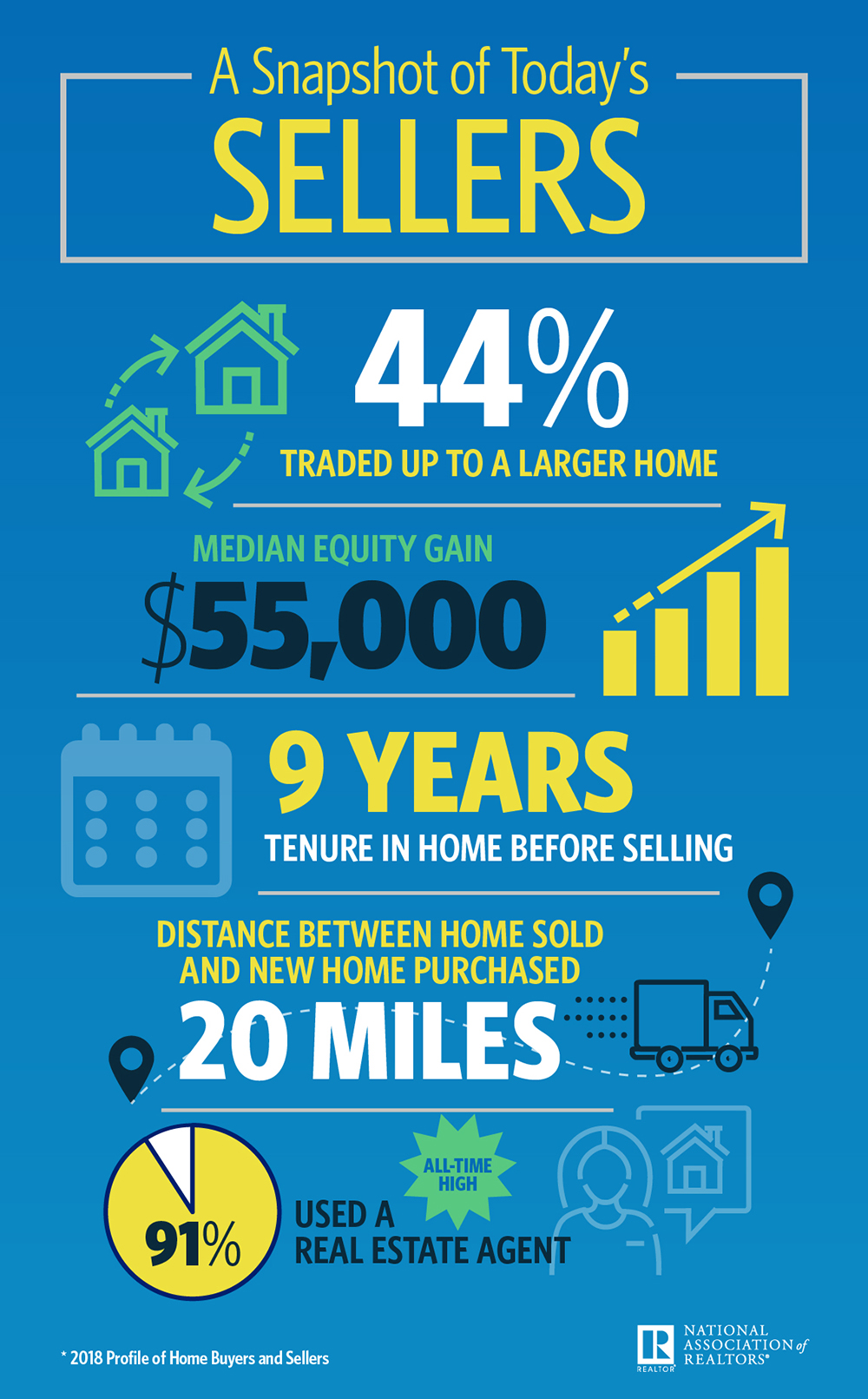 but they do so with vigor when they are confident in their job security, income and the nature of the world as a whole. (Search listings here). When they are lacking these elements, there is hesitation. This leads to all the factors I’ve just described. There’s not question that entry level is hot (even when $1.5M means entry level-ish for a nice single family home in West LA) but everything else is slower. The serious sellers are going to sell their properties and the serious buyers are need to write offers. As the data comes in over the coming months, don’t be surprised to see that sales are still off, and that price appreciation continues to slow. We may even give a little back. None of this is out of the ordinary when it comes to the cycle of real estate and for that matter, the cycle of the economy as a whole. Nothing goes up forever. That doesn’t mean we are in for a significant correction or even necessarily headed towards a recession (2 consecutive months of negative GDP) rather, that we are experiencing the natural course of economic behavior. Economic cycles are a part of life and real estate is a cyclical business. There’s always a correction coming, not if, just when? But with that correction comes opportunity for the savvy buyers and sellers.
Have something to sell or thinking of buying, give me a call. (Contact Tim Here).
#realestate #luxuryrealestate #theeconomy #thefederalreserve #allrealestateislocal #dilbeck #christiesinternationalrealestate #luxuryportfolio #leadingre #interestrates #taxcuts #thousandoaksrealestate #westlkevillagerealestate #conejovalleyrealestate #agourarealestate #calabasasrealestate #oakpakrealestate #theconejovalley
 If you want to get in for the kids before school starts, that’s timing too. It’s timing subject to a set of priorities you’ve assembled. Same is true if your career has certain times of year that may be slower, when you have a little more time to move. For me that is fall because spring is always crazy in my business and I couldn’t imagine trying to move in spring. For my insurance buddy that’s spring because the last part and first part of every year is open enrollment and renewal. For my accountant that’s May-June, after tax season and after a much needed vacation. Perhaps you have been looking in spring and felt that everything nice was disappearing. There were multiple offers and prices seemed to be running away from you so you decide to hold off until fall. That’s timing of a different sort too, that’s timing the seasonality of the housing market.
 That’s timing the market and that’s what you should be looking at doing now. Don’t misunderstand, I’m not suggesting like all the investors on CNBC do that “You should buy now, buy now!” I hate it when I hear that because what do you expect them to say? Don’t buy? They never do. Same can be said for a Realtor, but when you are in the market for a home and you know that sales are slowing it’s important to realize that while you may not be at or even near bottom, a home is so much more than an investment. If you can find a home you love and you know that the price is softer now than it was just a few months ago, write your offer. Write a lower offer. Test that seller. How motivated are they? Do they really want to sell today or are they willing to wait? This is especially true if that home has been on the market a while and the seller has already had a couple price reductions.
 most of the homes on my list. Like anyone, I wasn’t really sure what I liked at first but through research and seeing some homes, I got a pretty good handle on it. There were a couple of homes early on I wanted to see but wasn’t able to get in to and that was frustrating. Apparently, some traditional agents wouldn’t set up showings because my assigned agent wasn’t able to provide them with information about me like my preapproval letter and down payment funds etc. At the time, I wasn’t inclined to give that up since I wasn’t always working with the same agent. It hadn’t occurred to me that not having a single, established local agent who knew about me interfacing with the listing agents meant I wasn’t being taken as seriously as I might have been otherwise. By hiring the rebate broker and doing my own research I planned to save about $5,000 which I thought was a lot of money. In hindsight, what I thought I understood and expected about the home buying process wasn’t entirely accurate.
  I looked at it a couple times with 2 different agents from the firm before finally writing an offer. I had a lot of questions about the property but had trouble getting answers. Turns out that I was asking many of those questions too early, so I was frustrated for no reason. My agents didn’t explain the process and I didn’t know to ask because the people who were showing me the property were always different. The seller always had the same agent interface with me but I was getting different people. I didn’t realize this was what happens with most online brokers. You don’t work with the same person throughout the process. I later found out that this approach is common to online discount brokers. My “main agent,” the one who wrote the offer, recommended an inspector whose reviews were solid and so I went with it. I didn’t actually meet my main agent for the first time until the inspection. Not knowing any different, I was like, “Okay…” During the inspection, my agent said to me on more than one occasion that the “Seller would take care of this or fix that.” Imagine my disappointment when the seller balked at most of my requests for repair. I didn’t expect a “new home,” but I thought surely the seller would fix pretty much everything that I thought was wrong or I was going to have to correct right after I moved in. My agent made it sound like fixing everything I wanted was common place. Maybe if I had a stronger relationship with my Realtor this would have been explained better. News flash: Sellers don’t see the world from the buyer’s perspective. What negotiating repairs comes down to I found out, is how much did I want to buy the home vs. how much did the seller want to sell? It’s from that place that we’d negotiate repairs. Turns out, there is no guarantee the seller was going to do all the repairs I’d like done. It would have been helpful to have known that going in. Maybe had I not had a revolving door of agents I would have had a better relationship with my agent and would have understood this better.
 This is for a variety of reasons not the least of which is they’ve got a super low interest rate on their current mortgage so any move up in price is exacerbated by higher borrowing costs and higher taxes. Senior sellers can’t find the one story they want, in the neighborhood they want to live and are choosing instead to put in lifts or move downstairs. More and more baby boomers are electing to die in their home rather than move too and that further constrains available inventory.
 If they can’t get it in their price point, they won’t buy. There is a lack of incentive. Prices aren’t low and rates aren’t super low like they were, two big incentives for fueling our recent housing demand. Moreover, the discount or negative premium buyers today demand of under improved homes is substantial, which runs in contrast with the asking prices of those same homes following years of broad appreciation. (As opposed to the premium they’re willing to pay for turn key remodeled.) This problem is exacerbated by the home builder’s failure to build more entry and mid-level homes. Most analysts fail to consider the impact that new homes have on the overall health of real estate market. People sell their existing home to buy a new home. That existing home is then added to the supply of available inventory. If builders aren’t building where the demand is, then we end up with an over supply in homes people don’t want (or can’t afford) and a shortage of those people do. What happens when there is an over-supply of homes in a price range where there is a limited supply of buyers? That’s right, price corrections.
 Some, like 2007, started like the scene in Indiana Jones and the Temple of Doom, where you heard a low rumble and seconds later there was a wall of water coming down the tunnel. Obviously, that crash, more violent than any before burned brightest right before it flamed out. Most other times it’s just a gradual sort of slow down and then nothing. The market just dries up and everyone stares blankly at each other and wonders aloud, “Market’s slow, I wonder how long this will last?” I believe this is that kind of market we find ourselves in today.
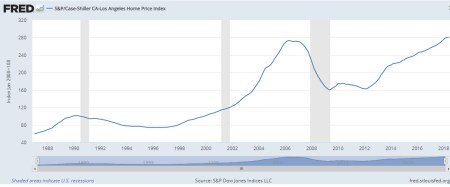 that show sales (monthly closed transactions) were down and price appreciation is slowing dramatically in all but a few markets. Yesterday, the National Association of Realtors put up their pending sales numbers and as expected, they are similarly uninspired. Sales are down month over month for the 7th straight month in every region and price appreciation while still a thing, is declining year over year. The thing to understand when looking at year over year appreciation numbers, is that as a market tops out and the subsequent months go up less and less, this year’s price starts to look a lot like last year’s price and the spread between the two narrows. If that trend were to continue indefinitely, you’d end up with a graph that is just a flat line, ie: August’s median price last year was $750,000 and this year’s is too.
 and make my prediction. (If you are unfamiliar with Carnac,
 The thing to bear in mind is that real estate always adheres to the basic economics of supply and demand. Prices go up when demand goes up and when demand declines prices follow. Naturally demand is affected by affordability which factors in the cost of borrowing money (interest rates) and the strength or lack there of in the economy. When it comes to supply, things like speculation and the ease and availability of financing are big considerations. In the bubble of 1989, there was plenty of new construction going up but speculators were buying and flipping driving up prices more than the actual market would have otherwise supported. In the bubble of 2006, financing became so easy, anyone could get a loan to buy, falsely inflating demand.
 If my grandkids are in Prescott, AZ and darn it, I want to be with my grandkids, I’m selling. If the market is slowing you have to ask yourself, is it going substantially lower or is this just a seasonal blip? Obviously if you had a crystal ball that said prices were on the path of a 10% correction, you’d price more aggressively than your competition and get it out there and sold right away. Unfortunately, we don’t have a crystal ball. In the face of a correcting market however, I usually assume the worst. I’d rather get out early, leaving a little money on the table, than look back and say I should have sold then. It’s a bit like musical chairs and I just want to make sure I get a chair.
 trying to grind every penny out of your seller. This is how I’d approach buying. Ultimately since no two homes are the same, there will be one you favor more than the others and on this one, make your lower offer but don’t insult the seller and don’t lose your dream home over some principled “the market is crashing don’t you get it?” approach. If the market is really crashing and obviously so, then that’s a different discussion. Remember, this is advice for you buying your home, not an investment where it’s “All about the deal.” Since most corrections are modest in nature, the goal shouldn’t be to steal the property, rather to get a better price, move in and live happily ever after!
 a seller must absorb like both Section 1 and 2 of a wood destroying pest inspection and a VA buyer can’t pay escrow, although there are ways around this. A typical VA loan requires as little as zero down but has a high balance loan cap, which while varying from county to county, can reach as high as $679,650. For most of greater Los Angeles area this is the cap. But VA doesn’t actually have a loan limit and a VA borrower who has sufficient eligibility, can seek a virtually unlimited loan amount. The catch is that borrower must put down 25% of the loan exceeding the county cap. ie: A vet buying a home for $1,679,650. The amount borrowed exceeding the county cap is $1,000,000 ($1M + $679,650 = $1,679,650). The vet then has to put 25% down on the excess $1M which is $250,000, while putting zero down on the first $679,650. This is great for a vet because a normal borrower would have to put 20% down on the purchase amount of $1,679,650 which would be $335,930 (20% of $1,679,650) while the VA borrower only has to put down $250,000 (25% of the amount above the cap). That’s a difference of $85,930 that the vet doesn’t have to put down. Other VA benefits include a typically lower interest rate and up to 60% back end debt to income ratios. Back end ratios are the mortgage plus any other debt divided by gross income vs. front end which is only the mortgage divided by income. The benefits of doing a VA loan therefore, are substantial (contact me for more


 They do however, keep all of that 2% commission to themselves, doing nothing but put your home on a hard to find-if-you-don’t-know-where-to-look website, and hope someone sees it. Pretty hard to imagine them selling for the true market value when no one knows you’re even on the market and the Realtors with buyers aren’t compensated to show their clients your home.
 How could it be, with so much riding on it? Dividing the labor demands into multiple people may save money and even be more efficient in a production line kind of way, but this is no way to handle any transaction with such far reaching implications and financial importance. With me, the buck stops here. Online, there is no “here” for the buck to stop. And this doesn’t begin to address the significance of the emotional support and counsel a quality Realtor can provide to a buyer or seller. I can tell you that at times I am a therapist, an accountant, an attorney (not really but I feels that way) and a marriage counselor. I am a financial advisor, retirement planner, crystal ball reader and by the end of an escrow, a virtual member of the family, because there is nothing more important when buying and selling real estate, than trust (so
  contains several default contingency periods. There’s the 17 day contingency for appraisal, 21 days for loan approval and up to 17 for investigation. Investigation includes the physical inspection, title search, HOA document review and insurability. The physical inspection can include, geological, Radon testing, mold test, structural, roof, sewer line, property line survey etc. Often times in this competitive marketplace, the investigation contingency time period gets shortened to as few as 7 days. In fact, in San Francisco and much of the Bay Area, the seller will pay for an inspection, then complete any repairs they intend on doing and then offer the home “As-is.” If the buyer wants to do an inspection of their own, they do so before the home ever enters escrow, before their offer is even accepted and some cases even before they write the offer. Once in escrow, the buyer’s money is pretty much on the table from the get go. When it’s a seller’s market like it is there, a buyer has to be happy to just find a home they can put into escrow.
 I like to tell my clients that it’s all about the three P’s (Preparation, Presentation and Price) and if they follow my recommendations and invest in their sale, which sometimes can run upwards of $10,000, I will double and maybe even quadruple their return on investment. To be fair, I have no real way to measure this, but just as pricing strategy is a matter of opinion, I feel I’m pretty right on with this assessment.
 If the object is smaller than your fist, get rid of it. Harsh I know, but small items by definition are cluttering and the goal is to make your home as sleek and clean looking as it can be. I know you want to keep pictures of the kids and grandkids; the little snap shot of gramma holding you as a baby, but trust me on this, your buyer doesn’t want to see it. This holds true for your Elvis ashtray collection, tea cups, Victorian era spoons… you get the picture.
 up 2/3 of the inventory and FYI, there’s no reason to ever display paperbacks. If you’ve got those, you’re going to want to pack them. By the way, the library is happy to take your hard backs and give you a tax deductible receipt for them. Speaking of donating, you’re likely to want to organize a part of your garage for charitable donations. Most will pick up for you. Salvation Army even takes furniture. Word to the wise: don’t just open the garage and expect them to go in if you’re not at home, they will just drive off and you’ll have to reschedule.
 Not only does it overwhelm a potential customer and make them not want to stay in your home, it makes them suspicious that you are trying to cover something up like pet urine or dirty dog. Try some lemon on your cutting board or in your garbage can, it kills bacteria. Woodsy smells are good too and Cinnamon is especially good around the holidays.


 The Real Estate Conversation