The first thing you need to know about relocating to the Conejo is that it’s pronounced Koh-nay-hoe not Cone-Joe. Conejo means rabbit in Spanish. The Conejo Valley is one of the most beautiful places on earth and arguably the most special in Southern California. The weather is near perfect. The schools incredible.

For more school info click here
You can go for a breathtaking hike with ardent hikers or your 5 year old one minute and then at the beach the next. We are located midway between Downtown Los Angeles (think Lakers, Kings, Clippers, world class museums and Broadway theater) and Santa Barbara (think romance, wine tasting, art walks and shopping). Both are 45 minutes without traffic so allow for 1.5 hours as a rule, this is greater LA after all. We have a regional trauma center and hospital and a fashionable indoor-outdoor mall with Nordstrom’s. You’ll find employers like biotech giant Amgen and neighboring Atara, food giant Dole, music giant Guitar Center, insurance giant Anthem, the LA Rams and the list goes on and on. Home to nearly 200,000 people (about 400,000 when you factor in neighboring Calabasas, Camarillo, Moorpark and Simi Valley) it’s a fantastic place to live, to grow old in or to raise a family.
Thousand Oaks, the area’s largest city, has more than a thousand oak trees. They’re beautiful and grand. Should you find one on the property you like, be advised that you can’t cut it down. You can’t even trim a branch if it is larger than 4 inches in diameter. Suffice it to say the fines for damaging or removing an oak tree in Thousand Oaks are hefty. We do love our oak trees and they are protected. We also love our open space and the Conejo Valley is completely ringed by protected regional, state and national park land including the majestic Mt. Boney, the last mountain in the Santa Monica Mountain range. It makes for spectacular outdoor scenery and activities but it also means you won’t find many new homes being built.

Mt. Boney
The Conejo Valley rests atop the Los Angeles and Ventura County lines. For example, Westlake Village which is home to our most expensive real estate, was incorporated in 1981. However, Westlake Village makes up only half of what we consider Westlake. This is because a California city cannot be in two counties. Thus, when Westlake Village
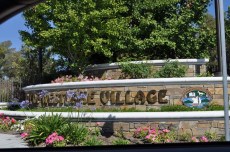
Westlake Village
became incorporated only the LA County side was allowed to do so. The Ventura County side was absorbed into the city of Thousand Oaks. The zip codes for Westlake south of the 101 Freeway are 91361 for both counties. The address used is Westlake Village. Go north of the freeway and it’s 91362 and called Westlake Village for both counties as well. More significantly, the school districts are entirely different. If you want your kids to go to Westlake High School (Conejo Valley Unified School District) you must live on the Ventura County side. The LA side goes to Agoura High (Las Virgenes Unified School District.)
In 1982 Agoura (pronounced Uh-goor-uh) incorporated into Agoura Hills, leaving behind a swath of homes over the Ventura County border in unincorporated Ventura County. This area originally known as Agoura now bears the name of Oak Park. Oak Park has its own zip code: 91377, its own government and most importantly its own Blue Ribbon school district (Oak Park Unified School District.) Unlike Westlake, Oak Park successfully resisted incorporation into the city of Thousand Oaks. When you ask someone about Oak Park the first thing they mention are the schools. Since most of the schools throughout the Conejo Valley have Great School rankings of 9 out of 10 or better, the fact that Oak Park is known for schools means something special is going on there.
To recap the craziness of the various municipalities and the County Line, we’ve got two Agouras, two Westlakes and three schools districts. There are unincorporated areas as well as 3 sub-cities in Thousand Oaks: T.O. proper, the aforementioned Westlake (part of T.O.) and to the south west, Newbury Park. Temperatures by the way vary from Agoura Hills to the Newbury Park by as much as 15 degrees on a hot summer’s day. Newbury Park is cooler since it’s closer to the ocean. Nothing demonstrates this unique nature of our boundaries better than Westlake Island (and yes there actually is a lake in Westlake). The entrance to the gated island is by way of a street named La Venta. This is derived from LA/Ventura because the road is literally the county line. In fact, “The Island” is smack dab in the middle of the lake (Search for Westlake homes here) and is literally divided in half. Half on the Ventura side, half the LA side. The Conejo is also home to three other lakes. Two that you’ve likely not heard of are Lake Lindero and Malibou Lake. Malibou Lake (yes like caribou) was a cabin-on-a-lake getaway for Hollywood Celebrities as early as the 1930’s.

Malibou Lake
I can picture some famous Hollywood actor bouncing across the San Fernando Valley on a then two lane Ventura Blvd., up and over the Calabasas grade then left into the canyons, finally pulling up to a cabin nestled above Malibou Lake in the foothills of the Santa Monica Mountains. Homes with lake rights are actually part of a co-op called The Malibou Lake Mountain Club and offer a truly unique lifestyle in the mountains while only being 7 minutes to Agoura and the 101 freeway. The lake many people may have heard of is Lake Sherwood. Built around the sensational Jack Nicholas designed PGA quality golf course, this community of mostly single family homes starts in the high $2M’s with town homes in the mid $1M range. The Sherwood Country Club has hosted the Tiger Woods Open

Lake Sherwood Golf Course
and Greg Norman’s Shark Shootout golf tournaments and boasts the only tennis club that features all 3 court surfaces. Lake Sherwood was named after Sherwood Forest because Errol Flynn’s 1938 classic film Robin Hood was partially filmed there. Lake Sherwood is unincorporated Ventura County and like it’s even more expensive horse ranch neighbor Hidden Valley, has no municipal government. Resident children attend the Westlake schools on the Ventura County side. In addition to our amazing public schools, the Conejo has a multitude of private schools including La Reina Catholic Girls High School and Oaks Christian which spans all ages and has had their share of famous name alumni/alumni parents, plus a bunch of other parochial and non-parochial including the esteemed Carden School.
Another curiosity for most first time visitors here is that the Pacific Ocean is both to the west and the south. We are located on the odd part of the California coast line where the state bends so that the ocean is on two sides. Not a big deal but this tends to throw off your sense direction since the 101 freeway runs north-south from San Francisco to Los Angeles except the portion from Ventura to the San Fernando Valley, where it runs east-west.
As for housing… that’s my expertise. In winter 2020, the least expensive single family home was in the upper $500K’s. Prices range to 8 figures when you include Sherwood, Hidden Valley and a handful of homes near the North Ranch Country Club in Westlake. The median is somewhere in the mid to upper $700K’s. You can also find town homes and senior housing where prices are under those marks and even into the $200K’s. Neighboring Calabasas is generally comprised of pretty high end, gated neighborhoods while Simi Valley, Moorpark and Camarillo (pronounced Kamm-a-ree-oh) offer a greater variety. If you ask residents in each of those adjacent cities, they will tell you all the reasons they actually prefer their town to Thousand Oaks, Westlake or Agoura. In Moorpark for example, when the little league season opens, the entire town shows up for the parade. Moorpark also is home to Moorpark College part of the Ventura Community College system and a natural feeder into UC Santa Barbara, my alma mater. Drive down the major streets of Simi or Moorpark and you’ll see banners heralding local young men and women who are serving in our military. Heck, Simi Valley is home to the Ronald Reagan library.

Ronald Reagan Libary
Camarillo will tell you that at sea level you don’t need air conditioning and that it’s home to the Camarillo Airport, the outlet mall and Cal State University Channel Islands with its newly created school of engineering. Located on what was once the California State Mental Hospital, the buildings of CSUCI also claim to be the inspiration of the Charlie “Bird” Parker song, Relaxing In Camarillo. Being a professional musician and Arista recording artist in life BRE (Before Real Estate) I love that trivial fact… Other nearby major universities include California Lutheran (also known as CLU or locally referred to as Cal Lu) the off season training grounds of the Los Angeles Rams and Pepperdine University in Malibu. Yes, Malibu and everything it offers, is just 13 minutes from the Conejo Valley via Agoura Hills or Calabasas.
Moving to a new area can be a big life-change, but the Conejo Valley is one place that it shouldn’t be. The Civic Arts Plaza

Civic Arts Plaza
offers great entertainment, touring shows etc., CVUSD has wonderful programs for kids in the autism spectrum (see my Special Needs Resource Guide here), Moorpark has great horseback riding; baseball and soccer reign supreme in all the towns and I believe virtually every religion offers multiple places to worship. We even boast a Mosque in Newbury Park, copper dome and all. The canyon roads are popular for motorcycle and sports car enthusiasts as well as cyclists including a portion of The Amgen Tour of California, not to mention vintage watering holes like The Old Place and The Rock Store. So if you’re moving to this area, consider yourself blessed to have such a wonderful place to call home.

Tim
The old timers still use 1000 Oaks, Ca on their return envelopes (thinking about buying or leasing? Visit 1000oaksrealestate.com here) and will proudly refer to our Valley as God’s Country, because it really is that beautiful. There’s a lot to talk about if you are relocating to Southern California. As a native Californian, California real estate broker, Certified Residential and Corporate Mobility Specialist, I’d like to help with your relocation (contact Tim here). Whether you’re looking for a luxury estate property or a more modest family home or condominium, let me welcome you to your new home right here along The County Line.

 Yesterday the California Supreme Court ruled on dual agency. Dual agency is when a broker represents both the buyer and the seller in the same transaction.
 The Association’s supposition was that even though Coldwell Banker had a dual agency, since the listing agent was not representing the buyer, the listing agent should have loyalty and a fiduciary obligation to the seller first.
 This is called “Procuring Cause.” If I’m a buyer, who’s going to write my offer if they won’t be entitled to a commission? So, the Horiike ruling is potentially not without consequence and could lead to a move towards smaller independent offices and away from the huge Coldwell Banker, Keller Williams and Century 21’s of the world. Now personally, I don’t believe that dual agency is ominous and in fact I do it a few times in any given year to the benefit of both my buyers and sellers. That said, I guess this is another good reason for an agent to be with a boutique brokerage, like I am (Learn more about Tim
  This is fundamentally what escrow does. Unlike many states where closing is done at a table with lawyers, buyers and seller sitting across from one another, California relies on an escrow service to conduct and facilitate the transaction. Escrow generally runs smoothly so most people don’t give it much thought, but that doesn’t mean it isn’t rife with potential problems.
 Huh? That’s right, wired funds must pass through the Federal Reserve and they close around 2 pm Pacific. So the deed is recorded and the buyer is the legal owner and ready to take possession of their new property, but the money hasn’t been deposited into the seller’s account yet. This just happened to me and making matters worse, it was the last day of the month which also happened to be a Friday. So not only did the buyer get the property before the seller received their proceeds funds, the seller had to wait until the following Monday to get their money! And lest you think this rarely happens you’d be mistaken, it happens quite often. Unlike a closing table where the keys are exchanged for the money, escrow always and by definition has to set up the recording and then record the transfer all before seller gets their money. In the transaction I just closed, the seller was livid that the buyer was going to have the keys before they had their money and wanted me to hold the keys and not give them to the buyer, even though the property had recorded and the buyer officially owned it! Thankfully in that example, escrow was able to rush the file through and beat the wire cutoff with just minutes to spare. That didn’t stop the seller from giving me an earful however.



 By any measure this is good news for homeowners and while growing more expensive, hopeful news for home buyers. The question on everyone’s minds of course is, can it continue?


 When I met with prospective buyers I would tell them, this is the best and only one person can own the best. Many would be buyers hemmed and hawed. “Sell it for money like the comps down the street,” they would say. I explained that quality costs and only one can own the best. Believe it or not, I’ve I actually sold this home three times. When it was new I told friends of mine, it was the best and they went for it. They put it tons of upgrades and spared no expense. The second owners paid a substantial premium for that home at a time when no one was buying anything. The third owners did the same and in each case they gladly paid the premium and I know for a fact that if you ask any of them they would tell you, it was worth every penny. The old sales master Zig Ziglar used to say, “It’s better to apologize for the price once, than the quality forever.” As many of you who follow my writings and visit my
 or Googie furniture, Eames etc. style, the house looks incredible and people jump at it, fighting over it even. Same is true for any architectural style. I recently saw a Craftsman style applied to a basic tract house single story. The owner had sandblasted the eaves and painted them brown. The siding and stucco were an olive color, the windows had been done in with the red clad on the outside, wood on the inside, a very expensive window, yet the package was so convincing that you’d think it was a Greene and Greene in Pasadena somewhere. The seller wanted a 30% premium. A side bar on that home: It didn’t sell for the premium the owners wanted, but not because there weren’t takers, but because the owners found that they could make a small fortune renting it on AirBnB because the style was so cool. This is a new and unique time we find ourselves in isn’t it?


 (sellers take note, fix your place up and buyers will want it way more…) What did I do? New floors, baseboards, doors, window sills and wainscot; built ins, carpet and paint, kitchen cabinets, counters and appliances, lighting. Well the lighting isn’t done yet, but you get the idea. Mostly first floor. I think Shakespeare himself would have a hard time defining my experience. Romance, tragedy, comedy… Because of this endeavor, I have several new appreciations and observations to share.
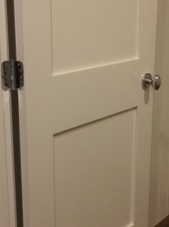 Are you really going to bring back a contractor later once you realize that the old ones look terrible when compared to the new ones? Moreover, that it will never be cheaper than right there and then? The cabinet man that was working on my kitchen got a call from the job he’d just finished. The job was in Beverly Hills which is a pain to get to even when you live in Beverly Hills. The owner had been unable to decide if he wanted dividers in his kitchen drawers. The job is otherwise done when of course he realizes that he needs dividers. So he calls the cabinet man who tells him it will cost $800. “$800???” the owner screams, for dividers? The cabinet man explains that since he is no longer on the job, he has to come and measure which means 1.5 hours in the car each way. Then has to get the material, cut it, drive back to install on another day so that’s three days. Had he been asked while he was there anyway, maybe $150. I hadn’t planned on putting in new entry doors, but once the trim and casing went in, I realized that the old door looked like dreck and I needed new doors. I got the doors on sale, just $1,800. But then I needed hardware: $750. Then they had to be hung, never cheaper since the guy was there already, there’s another several hundred and oh yeah they need to be painted and stained, $800 more. The decision in was never cheaper but wasn’t cheap: total cost $4,000… uh, that wasn’t in the budget… Those types of questions and opportunities arise throughout the entire process. Delay and you’ll pay way more down the line or you just live with it.
 In other words, mega mansions in 7, 8 and 9 figure range. One such mansion for example, took up an entire city block of Brentwood! In these homes, a cleaning crew sweeps and dusts behind the workers. No worker is setting a paint thinner can on the new carpet and they don’t just brush sawdust onto your new wood floors. If a miter joint is off by a quarter inch, it gets torn out and redone. On most remodel budgets however, that quarter inch gets you a shrug of the shoulders and a “Well no material is perfect,” kind of talk. Disappointment is part of remodeling and perfection simply doesn’t exist, no matter ow talented your contractor. Oh and your floors get scratched, things get broken, paint gets splattered, not everything fits together as it should and no matter how much time you thought it was going to take, it takes significantly longer.
 Failure to do this can lead to flooding and backed up sewer lines. Wait too long and the hydro will no longer clear out the debris and this means re-piping. When my mom recently replaced her driveway I suggested that she have a plumber run a camera down the sewer pipe to determine if it was clear since it would never be easier to repair than when the driveway was torn up. It cost about $150 to get a DVD made with the camera in the line and don’t ya know? The tree roots invaded the line and the connection to the City main was broken! That ended up being an $8,000 repair, at least the driveway didn’t have to be torn up and re-poured. By the way, do you now whose responsibility it is to repair the connection of a home’s sewer line to the sewer main? The home owner, even though it is under the street and past the property line.


 The Real Estate Conversation